When Outdated Construction Rules Make Neighborhood Projects Harder
Two nearby fiber projects from the same provider showed how local rules can change cost, timing, and resident experience. Pflugerville needs to keep construction standards current while still protecting neighborhoods.
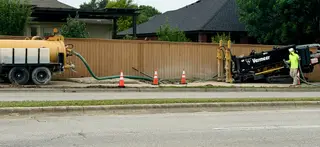
A lower-disruption construction method used on a similar fiber project in a neighboring city.
This week, I saw a clear example of how local rules can change the cost, timeline, market competitiveness, and resident impact of a construction project.
The photos are from neighborhood fiber installs. Both projects were being done by the same internet provider. One set is from my neighborhood under Pflugerville's current rules and regulations. The other is from a neighboring city that allows a more modern, lower-disruption construction method that Pflugerville does not explicitly allow.
In the neighboring city, the holes in people's yards were often dug, the lines were run, and fresh concrete covered it all up, with landscaping restored in a matter of a couple of days.
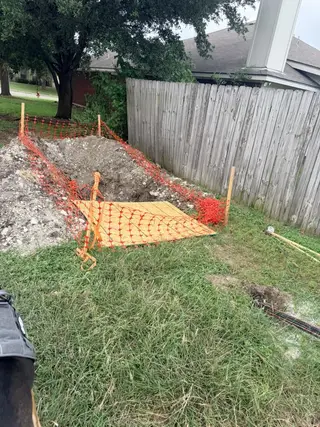
That is a very different resident experience than what we were seeing in my neighborhood. Here, the traditional method meant large open pits in yards for weeks, covered with plywood, along with disruption to sidewalks and landscaping.
A neighborhood fiber project in Pflugerville using a more disruptive construction approach.
Construction is always messy. Weather matters. Field conditions matter. Staff and Council also have a responsibility to protect streets, sidewalks, utilities, and neighborhoods.
But this is exactly why city rules have to stay current. When construction methods improve, outdated standards can unintentionally make projects slower, more expensive, and more disruptive than they need to be.
At a time when growth has slowed, Pflugerville needs to move faster to modernize the rules that shape private investment. We can protect residents and public infrastructure without creating unnecessary cost, delay, or disruption.
Different construction methods have their own pros and cons, so this is not a one-size-fits-all issue. The goal should be to let staff approve the right method for the right context, with clear standards and accountability.
I used a visible neighborhood fiber project to explain a broader policy issue: city rules can either support modern, lower-disruption construction methods or unintentionally make projects slower, more expensive, and more disruptive. I am pushing for Pflugerville to modernize the rules that shape investment while still protecting streets, sidewalks, utilities, and residents.